Basketball Club Teams in San Diego Shaping the Next Generation
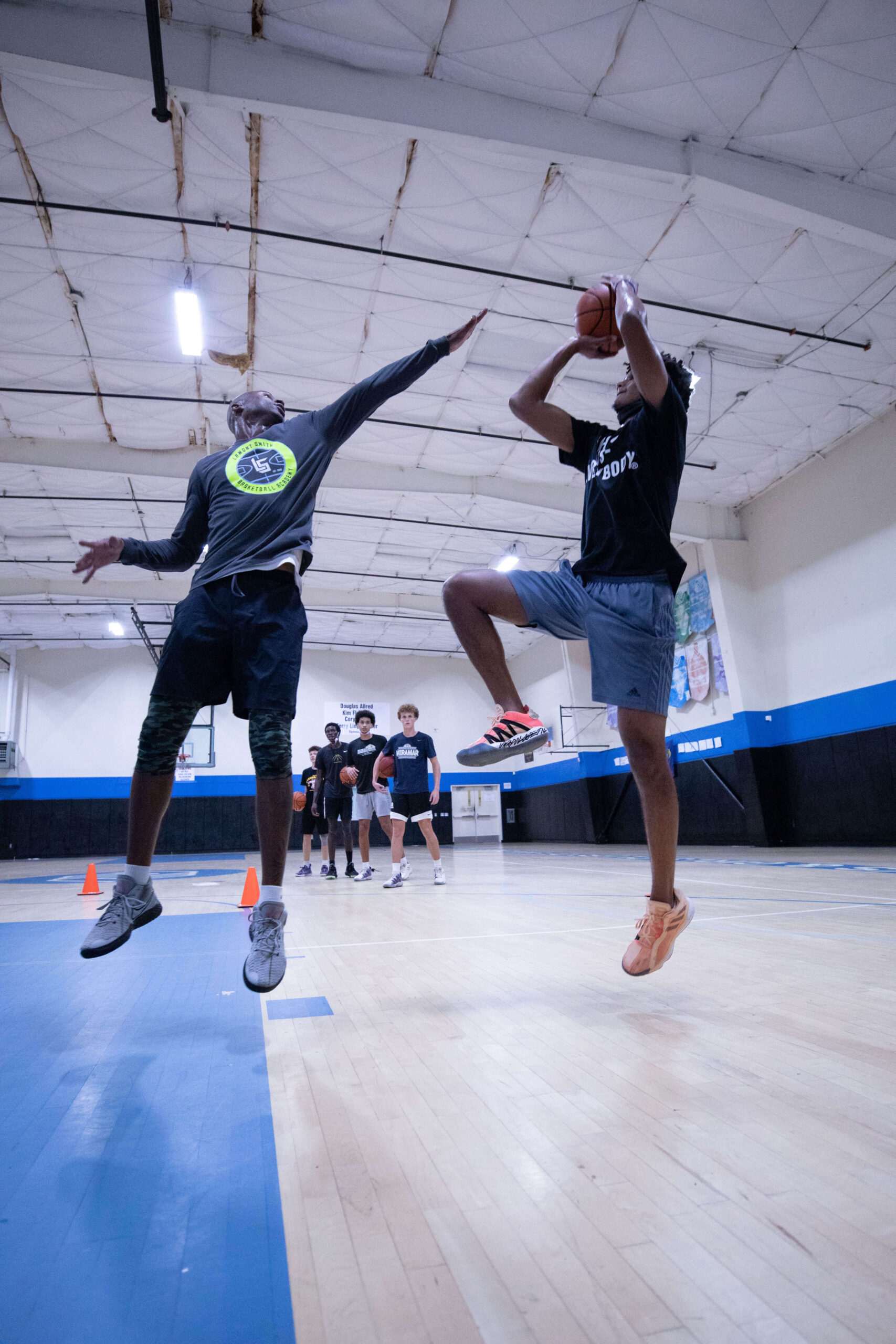
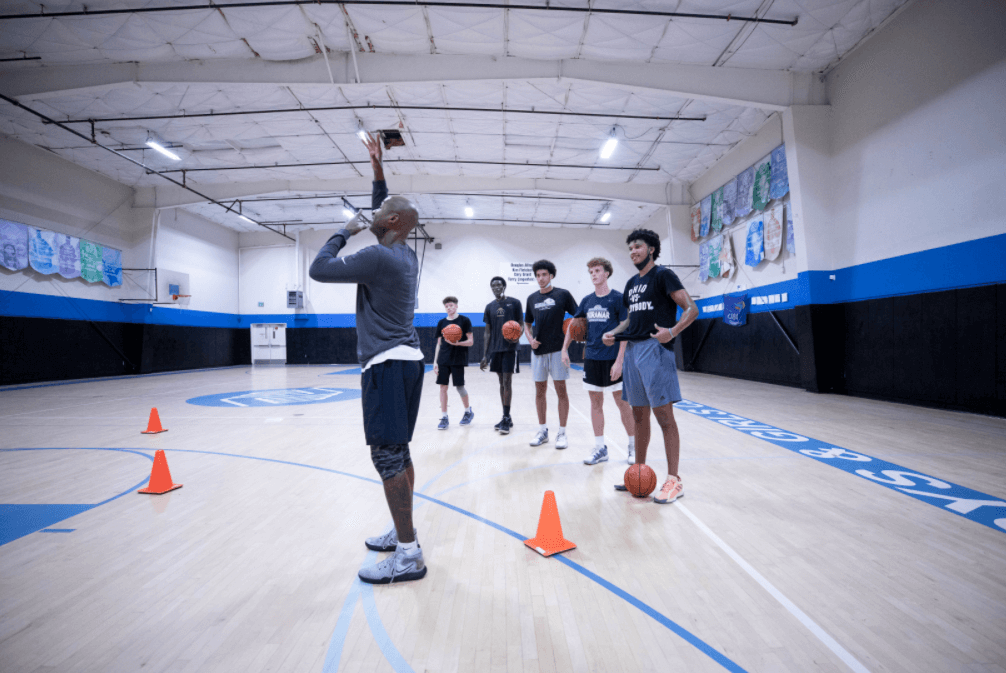
San Diego has always had the right ingredients for player development: strong school programs, good weather, deep community support, and a sports culture that rewards work. Over the last decade, though, club basketball has become one of the clearest forces shaping how young athletes in the region grow. For many families, the phrase Basketball Club Teams San Diego no longer means a seasonal add-on. It means the center of a player's development calendar, a place where habits are built, competition sharpens decision-making, and exposure to higher-level basketball begins early.
That shift has changed the local landscape. Club teams are no longer simply collecting talented kids for weekend tournaments. The best programs are teaching spacing, footwork, pace, defensive discipline, and emotional maturity in ways that complement, and sometimes exceed, what players get elsewhere. They are also influencing how teenagers view the game. A good club environment can make a player more coachable, more self-aware, and more resilient. A poor one can leave the athlete overworked, miscast, or convinced that highlights matter more than substance.
San Diego sits in an interesting position because it is both a destination and a proving ground. Its players face local competition, travel across Southern California, and often measure themselves against teams from Los Angeles, Orange County, Inland Empire, Arizona, and Nevada. That mix matters. It creates a standard. Young guards quickly learn whether they can handle pressure against aggressive traps. Wings discover whether athleticism alone will work once opponents can all run and rotate. Bigs find out fast if rebounding on size alone is enough when the other team stretches the floor and forces switches.
Why club basketball matters so much in San Diego
The local high school season still carries prestige. School pride is real, rivalries matter, and strong varsity programs remain central to the basketball identity of the region. But the club setting often provides something school basketball cannot: year-round repetition against varied opponents.
A player may see one defensive system all winter with a school team. In club basketball, that same player could face pack-line principles on Saturday morning, full-court pressure by lunch, and a five-out motion offense before the day ends. Those repetitions compress learning. When a young point guard must read hedge coverage, recover from physical on-ball defense, and still deliver the right pass to the weak side corner, development becomes practical rather than theoretical.
San Diego families have recognized that value. Many are willing to drive across the county multiple nights a week and spend long weekends in gyms because they can see the difference in real time. A player who looked tentative in November may carry himself differently by March after months of facing quicker defenders and being coached hard in meaningful possessions.
The strongest club programs also understand local context. San Diego is sprawling. North County has its own basketball culture. South Bay has another. East County produces tough, competitive players year after year. Central San Diego often serves as a crossroads where school affiliations matter less and fit matters more. Club teams that know how to bring those players together, and manage personalities from different basketball backgrounds, tend to do the best work.
What separates a strong club program from a travel team with uniforms
Parents new to the scene often judge a club quickly. They look at the gear, tournament schedule, social media clips, and whether the team travels out of state. Those things can matter, but they are not the heart of development.
A serious basketball club team starts with practice quality. If the gym time is structured, if drills connect to actual game reads, and if the coaching staff teaches rather than merely instructs, players improve. It sounds obvious, yet many teams still spend too much time on lines, speeches, and disconnected drills that do not transfer.
The better San Diego clubs usually share a few habits. They correct footwork relentlessly. They teach players how to play without the ball. They demand communication on defense, not as a slogan but as a standard. They also understand age-appropriate development. A fourth grader does not need a thick playbook. A middle school player does not need every possession called from the sideline. A high school athlete preparing for varsity or college-level basketball does need to learn time, score, spacing, and role discipline.
Another separator is honesty. Good coaches tell families what a player is, what a player is not yet, and what must improve. That kind of clarity is not always easy to hear. Still, it is more valuable than praise with no direction. In my experience, the athletes who grow the most are rarely the ones constantly told they are stars. They are the ones given a roadmap and challenged to follow it.
The real developmental benefits for young players
The best Basketball Club Teams San Diego offer more than games. They provide an environment where repetition meets accountability. That combination can shape a young athlete far beyond stat lines.
Take shooting, for example. Many players think shooting development is only about mechanics. Mechanics matter, but game shooting is also about balance after a hard cut, quick preparation off the catch, and confidence after a miss. Club settings, when run properly, create those moments over and over. A player might take hundreds of shots in private training, but in club practice he learns whether he can get his feet set while reading a closeout and making a decision in under a second.
Defense may be even more important. Club basketball can expose defensive weaknesses faster than almost anything else. A player who coasts through local rec competition often discovers that lateral speed, stance discipline, and awareness are not optional against top-level club opponents. Good coaches do not hide that truth. They build it into every practice.
The growth is not limited to skill. Many of the strongest gains are mental. Young athletes learn how to handle reduced roles, tougher competition, and long weekends where fatigue tests attitude. I have seen players mature significantly during a single spring season simply because they had to earn minutes against teammates who pushed them every day. Those lessons stay with them.
The family side of the equation
Club basketball in San Diego asks a lot from families. There is the cost, of course, which can be substantial depending on dues, uniforms, travel, coaching fees, and tournament entry. There is also the less visible burden of time. Traffic across the county is real. A weekday https://rentry.co/u2ycwhhq practice that starts at 6:30 can still require a parent to leave work early, manage dinner in the car, and juggle siblings' schedules.
That pressure can lead families to make rushed decisions. They may chase a recognizable name, assume more travel means better exposure, or join a team because a friend recommended it for social reasons rather than developmental fit. Those choices are understandable, but they can backfire.
What tends to work better is a slower, more practical approach. Families should ask how practices are run, who actually coaches the team, how playing time is handled, and what kind of competition the roster is built for. A sixth grader who needs confidence and skill reps may not benefit from being buried on an elite roster playing two minutes a game. On the other hand, a highly advanced player may stagnate if the level is too low and the habits around him are poor.
A helpful rule is to judge a team by what players become after six months, not how they look in the team photo. Development often shows up quietly at first. Better passes. Stronger defensive angles. More poise when pressured. Smarter shot selection. Those signs matter more than online highlights.
Exposure is valuable, but timing matters
One of the biggest misconceptions in youth basketball is that exposure should drive every decision from the earliest ages. In reality, exposure without substance does very little. College coaches, when they evaluate seriously, care about what a player can actually do in competitive settings. That means the player needs the skill base first.
For younger age groups, especially elementary and early middle school, development should outweigh branding. There is little advantage in flying around the country if the player still struggles to pivot under pressure, finish through contact, or defend the ball. The money and energy are better spent on strong coaching, competitive local or regional games, and meaningful practice time.
High school years are different. By then, level of play and visibility can matter more, particularly for athletes with realistic college ambitions. San Diego players often need access to bigger events because recruiting traffic can be denser in Los Angeles, Orange County, and nationally recognized tournaments. But even then, the strongest route is usually skill first, fit second, exposure third. When that order gets reversed, players often end up marketed before they are prepared.
How coaches influence the next generation
A club coach has unusual power over a player's development. He can accelerate growth by teaching details, or slow it by chasing wins at the expense of learning. In San Diego, where talent levels vary widely by age and neighborhood, coaching judgment becomes especially important.
The best coaches know when to let players struggle. That may sound counterintuitive, especially for paying families who expect polished results. But there is value in a young guard learning to break pressure through mistakes, or a forward learning timing as a weak-side shot blocker after being late a few times. Overcoaching every possession can create dependence. Teaching principles and then holding players accountable creates ownership.
Strong club coaches also manage roles carefully. A common issue in youth basketball is the early developer, the bigger or faster player at age 11 or 12 who dominates physically. If that athlete is allowed to only bully smaller defenders, his game can plateau. Good coaches force him to expand. They ask him to pass out of doubles, defend in space, and score with skill rather than force. That is how long-term players are built.
The same applies to smaller guards. In weaker environments, they can become volume dribblers who dominate the ball without learning pace or decision-making. In stronger environments, they are taught to organize teammates, change speeds, create paint touches, and make simple winning plays. The difference becomes obvious by high school.
What parents should look for before joining a team
Choosing among Basketball Club Teams San Diego can feel overwhelming because the market is crowded and every program can sound impressive. A few practical filters help separate genuine developmental value from noise:
- Watch a full practice before committing, if the program allows it.
- Ask who will coach games and practices, not just who owns the club.
- Find out how many tournaments are scheduled versus how many practice sessions.
- Look closely at roster size and likely role, especially for players who need reps.
- Talk to current or former families about communication, not just wins and losses.
Those questions usually reveal more than a flashy website ever could. If a team cannot clearly explain its developmental philosophy, or if the answer changes depending on who is asking, that is worth noting.
San Diego's competitive ecosystem and why it helps players
One reason club basketball has become so influential here is that San Diego exists inside a larger Southern California basketball machine. Even if a local team stays relatively close to home, its players are still likely to face excellent competition. That raises the standard.
Guards in this region, for instance, usually cannot survive on one move. Defenders recover quickly. Help rotations are faster than many young players expect. Coaches scout tendencies even at the youth level. This environment rewards adaptable players. The ones who thrive tend to process the game well, not just play hard.
That ecosystem also helps expose flaws early enough to fix them. If a player cannot shoot consistently from game range, opponents in quality club events will sag. If a big struggles to defend ball screens, good teams will bring him into actions repeatedly. Painful in the moment, useful in the long run. Those are lessons that shape future varsity contributors and, for some, college prospects.
San Diego benefits from this because it can develop locally while still measuring itself against broader regional benchmarks. Players do not need to wait until late high school to find out where they stand. They learn sooner, and that can be a huge advantage if they respond with discipline.
The risks that come with the club boom
Not every effect of the club basketball rise has been positive. Overuse is a real issue. So is skill dilution, especially when too many games replace too much practice. I have seen talented young athletes play four or five games in a weekend, then show up Monday with sore knees, tired legs, and little actual development to show for it.
There is also the risk of identity getting tied too tightly to a team level or tournament result. Youth basketball should be competitive, but not every bad weekend means a player is falling behind. Growth is uneven. One month a player cannot handle pressure. Two months later it clicks. Families who panic after every setback often end up jumping from team to team, resetting relationships and disrupting development.
A related concern is social media. Highlights can distort what matters. A no-look pass posted online may get attention. A clean closeout, an extra pass, or proper weak-side positioning usually does not. Yet those are the habits coaches trust. The best clubs in San Diego understand this tension and try to keep players grounded in substance.
Another problem is role confusion. Some teams promise equal development but default to winning through the same two players every tournament. Others rotate so loosely that nobody can settle into meaningful responsibility. The best programs find balance. They compete seriously, but they also keep an eye on the long view.
Building better players, not just better teams
When people talk about the next generation, they often imagine future stars, college signees, or standout varsity players. Those outcomes matter, but the deeper value of strong club basketball is broader than that. A well-run program teaches standards that carry over into school teams, into leadership, and into adult life. Showing up on time. Listening to correction. Competing without excuses. Responding to disappointment. Those things have real staying power.
In San Diego, some of the most meaningful success stories are not necessarily the players who dominate at 13. They are the late bloomers who found the right coach, the undersized guard who learned how to think the game, the quiet wing who became a trusted defender, or the athlete from another sport who discovered that basketball rewarded discipline in a different way. Club teams can create those trajectories when they are led with purpose.
The next generation will not be shaped by branding alone. It will be shaped by gym culture, by coaches willing to teach the unglamorous parts of the game, and by families choosing fit over flash. San Diego has enough talent to keep producing strong players. The question is whether the local club system continues to value development as much as it values visibility.
That is where the future will be decided, in ordinary practices on weeknights, in hard conversations after rough tournaments, in a young player learning how to pivot under pressure and make the right play anyway. Those moments rarely draw attention, but they are the foundation. And when Basketball Club Teams San Diego get that part right, they do more than win games. They shape athletes who are ready for the next level, whatever that level turns out to be.
A practical way to judge whether a club team is truly helping
For families trying to make sense of the scene, the simplest evaluation method is often the best. Ignore the sales pitch for a moment and look at the player after one season. Has he become more fundamentally sound? Does she make quicker reads? Has confidence improved for the right reasons, because skill improved, not because adults kept offering reassurance? Is the athlete more accountable, more resilient, and better able to play with others?
If the answers are yes, the team is likely doing its job.
If the athlete has played dozens of games yet still makes the same avoidable mistakes, still depends on raw athleticism, or seems more anxious and less coachable, that deserves attention. Not every issue falls on the club, of course. Development is shared work. But the environment matters a great deal, and smart families pay attention to what that environment reinforces.
San Diego's basketball future will be shaped in those details. Not just by who wins the next tournament, but by which programs keep producing prepared players, thoughtful teammates, and young competitors who understand what the game asks of them. That is the real promise of club basketball here, and when the standard is high, it is a promise worth believing in.
Lamont Smith Basketball Academy
888 Clairemont Mesa Blvd Suite T-2, San Diego, CA 92123
(619) 639-8778
FAQ About Basketball Club Teams San Diego
How can a player join an LSBA club team?
Players are evaluated during practices so the coaching staff can recommend an appropriate team and development level. Families should contact the academy to confirm current openings and evaluation details.
Are club teams available for newer basketball players?
Yes. LSBA describes multiple levels, including a developmental option for newer players as well as more competitive teams for athletes with prior club experience.
What do LSBA club team practices emphasize?
Practices emphasize basketball fundamentals, team defense, structure, communication, and player development. The specific focus may vary according to the team and experience level.
Do all LSBA teams travel?
Travel expectations vary by level. Some teams focus on local competition, while advanced teams may participate in tournaments elsewhere in Southern California or beyond. Families should confirm the current schedule before enrolling.